
Campus E-Scooter & E-Bike Regulations
New Electric Scooter Policy
Effective Aug. 1, 2026, the University of Pittsburgh prohibits electric scooters from being parked or stored on all University property. Electric scooters found parked or stored on University property are subject to fines and impoundment.
This change supports campus safety and aligns with Pennsylvania state law, which already places significant restrictions on where electric scooters can legally operate. The policy aims to reduce pedestrian and vehicle collision risk, address fire hazards linked to lithium-ion batteries, and keep campus walkways and building entrances clear and accessible.
This update also builds on existing guidance from Student Affairs, which has long restricted lithium battery-powered mobility devices — including scooters, skateboards, and e-bikes — inside residence halls and University buildings. The new policy extends that existing indoor restriction to all outdoor University property as well.
- When does this new rule take effect?
During the month of August, warnings to those that violate the policy. In September, the official impound and fine processes begin.
- Does this apply to scooters I already own and currently keep on campus?
Yes. This applies to all devices, not just new ones. We recommend not bringing scooters to campus.
- Are their state or city laws against e-scooters?
Yes, Pennsylvania's Vehicle Code (Title 75, Section 3703) prohibits motorized vehicles, including e-scooters, from operating on sidewalks. As a result, the only place a privately owned e-scooter can legally be ridden in Pennsylvania is on private property with the owner's permission.
At the city level, Pittsburgh does not currently authorize e-scooter use on its streets: the Move PGH shared e-scooter pilot program's authorization expired in July 2023, and no shared scooter program has operated legally in the city since.
Together, these state and city restrictions mean that riding a personally owned e-scooter anywhere in Pittsburgh — on sidewalks, streets, or public rights-of-way — already falls outside the bounds of current law, independent of any University policy. Also see PA Micromobility Information Sheet
- Can I park my e-scooter at an outdoor rack like I used to?
No. The parking of an e-scooter on any university property is prohibited.
- Can I use the designated charging station (e.g., the PG Garage)?
No. Charging stations previously available for e-scooters will no longer be usable for that purpose.
- Is this a full ban, or just a parking/storage restriction?
This is for the parking or storage of an e-scooter on university property. It is still illegal to operate e-scooters on public roads and sidewalks.
- What if I bring my scooter to campus anyway?
Expect it to be confiscated or impounded if found, likely without the option of appeal. Fines, citations, or disciplinary referral may apply.
- How will the e-scooter policy be enforced?
Any scooter found parked, stored, or ridden on campus is subject to a fine ($100 first offense, $200 second) and impound, with the University able to remove locks in the process. Repeat violations can be referred to Student Conduct (or HR/department heads for staff and faculty). Indoors, Residence Life separately enforces the lithium-ion battery rule in residence halls.
- What if my scooter is a mobility accommodation for a disability?
If a mobility device is related to a disability, please contact Disability Resources for more information.
- Does this apply to e-bikes too, or just scooters?
This does not apply to e-bikes being parked outside on campus at appropriate bike racks. However, the university still does not permit e-bikes inside university buildings.
- I live off-campus. Does the ban apply to me riding through campus to get to class?
Yes. It is illegal to operate e-scooters on public roads and sidewalks. Operating an e-scooter anywhere is subject to citations from law enforcement.
- Where am I supposed to store my scooter now?
All e-scooters need to be stored at a location that is not university property
- What if I already registered my scooter through the Bike Index?
Regardless if your e-scooter is registered with Bike Index parking and storing scooters anywhere on university property is prohibited.
- Why is the university doing this now?
Under the Pennsylvania Vehicle Code Title 75, § 102, electric scooters are illegal to operate on public roadways statewide. Additionally, Title 75, § 3703 explicitly prohibits motorized vehicles from operating on sidewalks. As a result, riding a privately-owned personal e-scooter on public streets or sidewalks in Pittsburgh is currently restricted by law.
Scooters move faster and less predictably than walking, which raises the risk of hitting pedestrians on crowded sidewalks and walkways — especially on a dense, hilly campus like Pitt's – or collide with vehicles. Riders often aren't aware they're expected to follow the same basic rules as other vehicles (yielding, stopping at intersections, etc.), and near-misses are common but rarely get formally reported.
In addition, batteries can overheat or ignite if damaged, improperly charged, or poorly made — which is why Pitt already bans e-scooters and e-bikes inside any University building, including residence halls, apartments, and academic buildings.
- What is the appeals process and who do I contact?
parkappeals@bc.pitt.edu or (412) 624-4034
Per Article VII, appeals must be filed within 10 calendar days of citation issuance, via any of:
- Email: pc.pitt.edu/mobility/parking/parking-tickets-appeals/appeal-form
- Fax: 412-648-2200 (available 24/7)
- Written: at the Parking Services Office during business hours
- Phone: 412-624-4034 (once citation is entered into the system, typically next business day)
Required information: name, PR number (if employee), status (student/staff/faculty), address, phone, citation number, plate number, permit number (if applicable), and reason for appeal.
Important: Filing an appeal does not pause or replace payment of towing, storage, or impound fees. Those must be paid regardless of appeal status.
If the Appeals Officer denies the appeal, the person may escalate to the Appeals Board (faculty, staff, and student representatives) within 10 additional calendar days. The Board's decision is final, though reconsideration is possible with new information, contingent on paying the fine first.
- Is there a deadline to remove my scooter from campus before enforcement starts?
The policy takes effect immediately. You should remove your scooter now.
- Will this affect my graduation or academic/disciplinary record?
See the university’s official student code of conduct.
E-Bikes
The University enforces e-bike parking regulations on its property at all times, including evenings, weekends, holidays, vacations, and breaks between terms.
- Park your e-bike at an outdoor rack or at a designated charging station.
- E-bikes are not allowed inside any University of Pittsburgh building, including residence halls, apartments, academic and administrative buildings, and garages except for PG Garage.
- Do not park your e-bike on or against trees, handrails, pipes, or trash cans.
- Improperly parked e-bikes are subject to impoundment.
Parking Tips
- Always use a lock when parking your bike on campus.
- Be sure to lock the rear wheel and frame to the rack, not just the wheel.
- Use a good-quality U-lock rather than a cable.
Where to Park and Charge
All e-bikes are permitted to park at outdoor racks. Visit the bike map to explore available covered and uncovered outdoor racks.
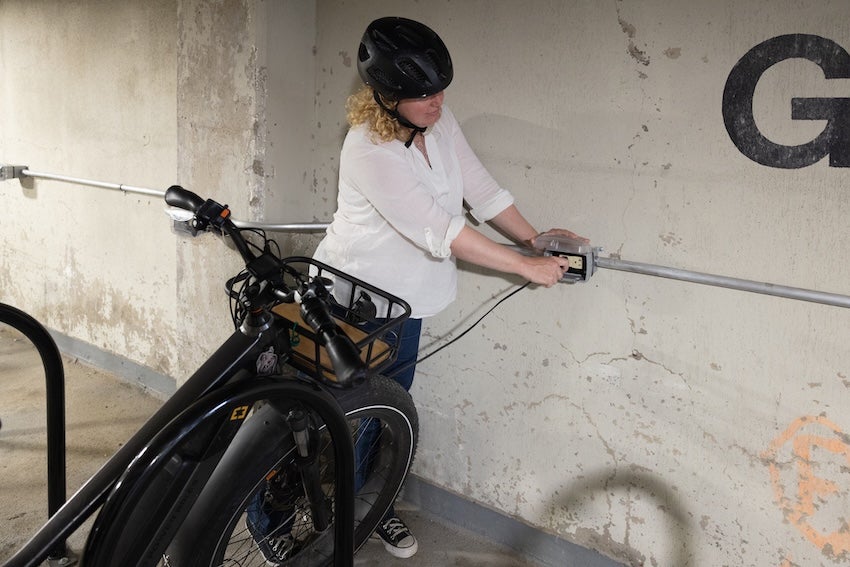
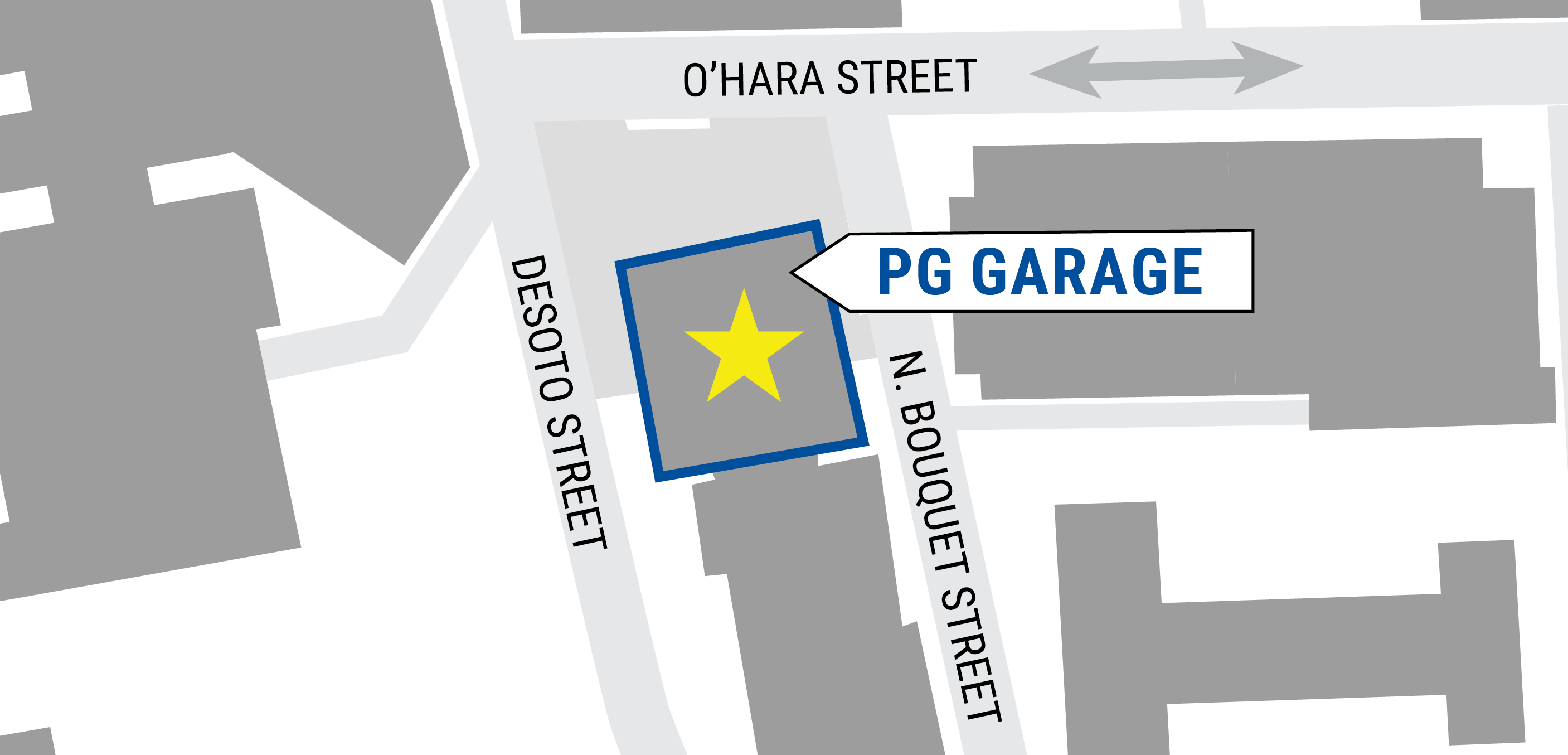
Charge your e-bike on campus at the second level of the Public Health Building (PG) Garage (3812 O’Hara Street).
Be sure to regularly monitor your e-bike while it’s charging and unplug once charging is complete.
Battery Safety Suggestions
E-bikes are commonly powered by lithium-ion or lithium polymer batteries which can overheat and catch fire if charged improperly or poorly manufactured. When purchasing an e-bike, search for devices, batteries, and charging equipment that meet nationally recognized safety standards, like:
- UL 2272 certification – the standard for electrical systems for personal e-mobility devices.
- UL 2849 certification – the standard electrical systems for e-bikes.
Manufacturers should be able to prove that their products were successfully certified to the applicable safety standards.
To avoid battery fires, it’s important to:
- Only use chargers compatible with your device’s battery.
- Do not use damaged or modified batteries (ex: leaking or bulging).
- Do not leave your battery plugged into a charger unattended.
- Unplug the charger from the battery once it is fully charged.
- Store and charge batteries at room temperature; do not store batteries in direct sunlight.
- Follow the instructions from the manufacturer.
In the event of an emergency, contact Pitt Police at 412-624-2121, Environmental Health & Safety at 412-624-9505, or 911.
Visit Section 02-009 of the University Safety Manual to explore fire safety policies and procedures as well as lithium-ion battery guidelines further.
Review micro-mobility regulations in Pennsylvania via the PA Micromobility Fact Sheet.
Explore Bike Pittsburgh’s E-BikePGH Guide to learn more about all things e-bikes!
Improperly Parked E-Bikes
A bike rack is the safest place for you to park your device on campus. E-bikes secured by trees, handrails, or blocking the right of way on the sidewalks, steps, and ramps can be immediately removed by Pitt Police.
E-bikes that show clear signs of abandonment (such as rusted chains, flat tires, and weather damage) and have not moved from a public rack for several weeks will be removed and impounded by the Pitt Police.
If the University moves your e-bike, locks will be removed, and the device will be impounded at your expense. If you believe your e-bike was impounded, lost, or stolen, please contact Pitt Police.
E-bikes that have been impounded and have not been claimed after 90 days are considered abandoned and become the property of the University.